

grass burn is really a painful injury which could develop while slipping or falling on artificial grass during sports. It could cause skin abrasions on the elbow, knee, wrist, palm, forearm, chin, and chest.
When these wounds form, they need to be cleansed immediately to avoid infection. Additionally it is good to use an antibiotic ointment to the wound and cover it with a breathable bandage.
Purify the Wound
When you're on the field, you're usually centered on blocking a go or chasing down a new player to tackle him, therefore the rough and abrasive nature of artificial grass isn't constantly in your thoughts. Once find it here fall on the grass, though, you expose you to ultimately friction, which might create severe skin abrasions referred to as turf burn. Since it loses a layer of skin, a grass burn is more severe than small scrapes and scratches. If ignored, it may get contaminated and serve being an entrance site for bacteria such as staph, which can happen to be other regions of the body and cause issues such as bone or bloodstream infections.

Cleaning the site following a turf burn is crucial because dirt, debris, or sand from the grass may transfer germs into the open area and cause infection. To completely clean the abrasion, use water or perhaps a saline solution and carefully rinse away any leftover filth. If the wound is bleeding, apply firm pressure and rinse until the bleeding stops. Then, using a clean towel, gently wipe it dry.
Apply turf burn infection of antibiotic ointment to the abrasion. If you don't have an antibiotic ointment on hand, aloe vera is an excellent option because it serves as a natural antiseptic and may assist in the healing process. Finally, apply a clean bandage on the abrasion. In order to avoid infection and promote healing, repeat the cleaning, ointment, and bandage regimen frequently.
Use Antibiotic Ointment.
grass burn occurs when exposed skin slides over artificial grass. The touch causes painful red abrasions and may lead to major medical issues such as for example methicillin-resistant Staphylococcus aureus infections (staph) and sepsis. These sorts of injuries are common among athletes who participate in sports, notably football and soccer. They could also develop in college or professional athletes who expose their legs and arms to the chance of slipping on the turf, such as cheerleaders.
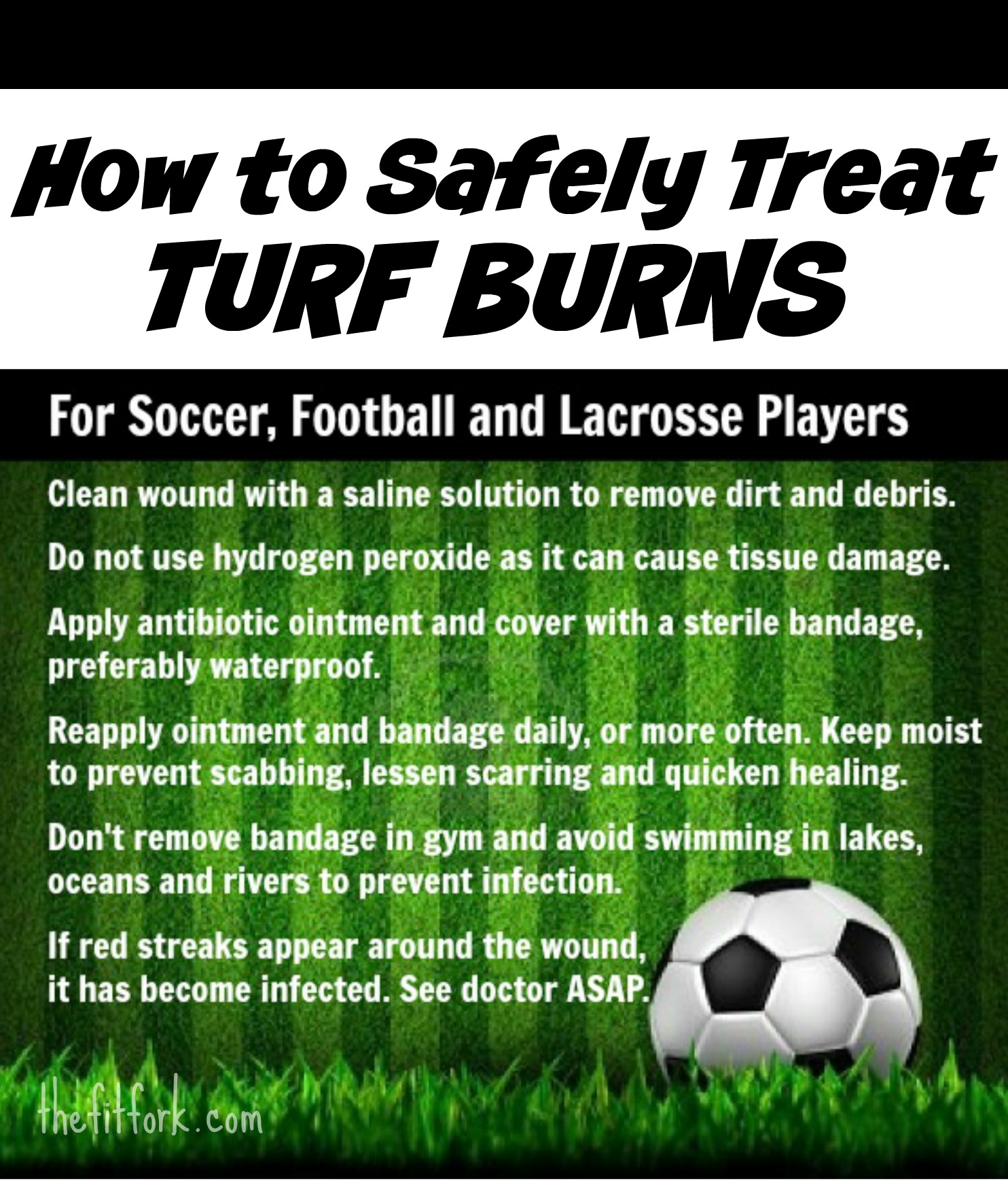
Athletes suffering from turf burn should promptly cleanse the region with water and a saline solution to remove any debris, grit, or sand that has been embedded in the skin. After washing, apply a clean wound dressing to the region and push firmly to avoid bleeding. To assist avoid infection, put antibiotic ointment to the wound if it's not too painful to the touch.
Due to greater physical contact and the usage of shared equipment, athletes tend to be more prone to get infections from skin abrasions. Furthermore, these abrasions serve as entrance sites for germs like staph, which may flourish in the presence of dirt and bacteria. As a consequence, it is critical to treat the injury as soon as possible and to monitor the region for early outward indications of infection, such as acute pain or pus, before it worsens.
Use Aloe Vera gel.
Turf burn is a painful injury which could lead to infection. It is advisable to treat grass burn immediately using a simple first aid equipment. If left untreated, grass burn infection can lead to significant problems. It is also critical to help keep the wound free of extra friction, since this might aggravate the damage. Friction could be reduced by using Body Glide or other products that provide a protective layer on your skin.
Turf injuries are produced by body-to-astroturf friction, whether from diving, sliding, or falling. turf burn infection may result in abrasions that develop into open sores. These wounds will then get badly infected with germs, that may enter your body and cause an illness. People who take part in sports are at a higher risk of infection since they have significantly more skin abrasions and enter into touch with other participants.
A raspberry-colored sore and little bleeding are the most typical signs of turf burn. This sore may be quite painful and can almost certainly sting even with therapy. It really is advised to avoid playing on astroturf before wound heals completely, which can take weeks.
It is critical to clean the wound, which might be challenging given the severity of the grass burn. It is advisable to wipe the wound with a clean and sterilized hand or piece of cloth. It is also advised that after cleaning, the area be washed with simple water and dried with a clean towel.
Protect minor turf burn
After cleaning the wound, it is advisable to cover it as fast as possible to greatly help avoid infection. It is also advised to use a hydrating bandage, such as hydrogel, to aid in the healing of the turf burn. Hydrogel dressings are helpful since they hydrate the wound, which aids in healing and reduces discomfort.
It is critical that you don't touch the wound with your bare hands. This escalates the possibility of germs entering and infecting you. Before cleansing the wound, it is advisable to properly wash your hands and, when possible, use sterile gloves.
When it comes to wound coverage, a non-adhesive wound dressing is best. This allows your skin to breathe, which is particularly crucial in case you are active and sweating. It is essential that the dressing be changed daily to keep the abrasion moist and healthy.
Turf burn could be entirely cured in a couple weeks, but it is vital to avoid sports until the injury has healed completely. This can save you from reinjuring the spot and lengthening your recuperation period. It is also smart to examine the wounded region regularly for early indications of infection, which might include excessive redness or pus. In the event that you observe any early signs of infection, you should see a doctor right once.